- Written by: admin
- August 11, 2024
- Categories: Factory, Real Estate
Choosing the right scaffolding is crucial for safety and efficiency. Learn how to select scaffolds based on project type, height, load, and safety requirements in NYC and beyond.
If you’re renovating a storefront in Brooklyn or constructing a high-rise in Manhattan, scaffolding is the backbone of your project. But selecting the wrong type can slow progress and increase costs. It can even cause accidents. Choosing the right scaffolding for your project isn’t just about price or availability. It’s about safety, efficiency, and compliance.
Every project is different. A small residential renovation requires different scaffolding than a commercial façade repair or an industrial site. From load-bearing capacity to height requirements, and from worker access to regulatory compliance, there’s a lot to consider. This guide will help contractors, site managers, and building owners make informed decisions to keep work safe, legal, and productive.
Understand Your Project Requirements
The first step in selecting scaffolding is to understand your project’s specific needs. Ask yourself:
- What type of work will be performed, i.e., painting, bricklaying, or window installation?
- How high will the scaffold need to go?
- How many workers will be on the scaffold at the same time?
- Will heavy equipment or materials be stored on the platform?
Let’s understand with an example.
A small townhouse façade may require only a lightweight, adjustable scaffold, while a high-rise exterior repair could require a suspended or heavy-duty scaffold capable of supporting multiple workers and tools.
Knowing your project requirements upfront prevents overbuying or underestimating scaffold needs, saving time and money.
Types of Scaffolding and Their Uses
Not all scaffolds are created equal. Understanding the main types helps you match the scaffold to your project.
Supported Scaffolds
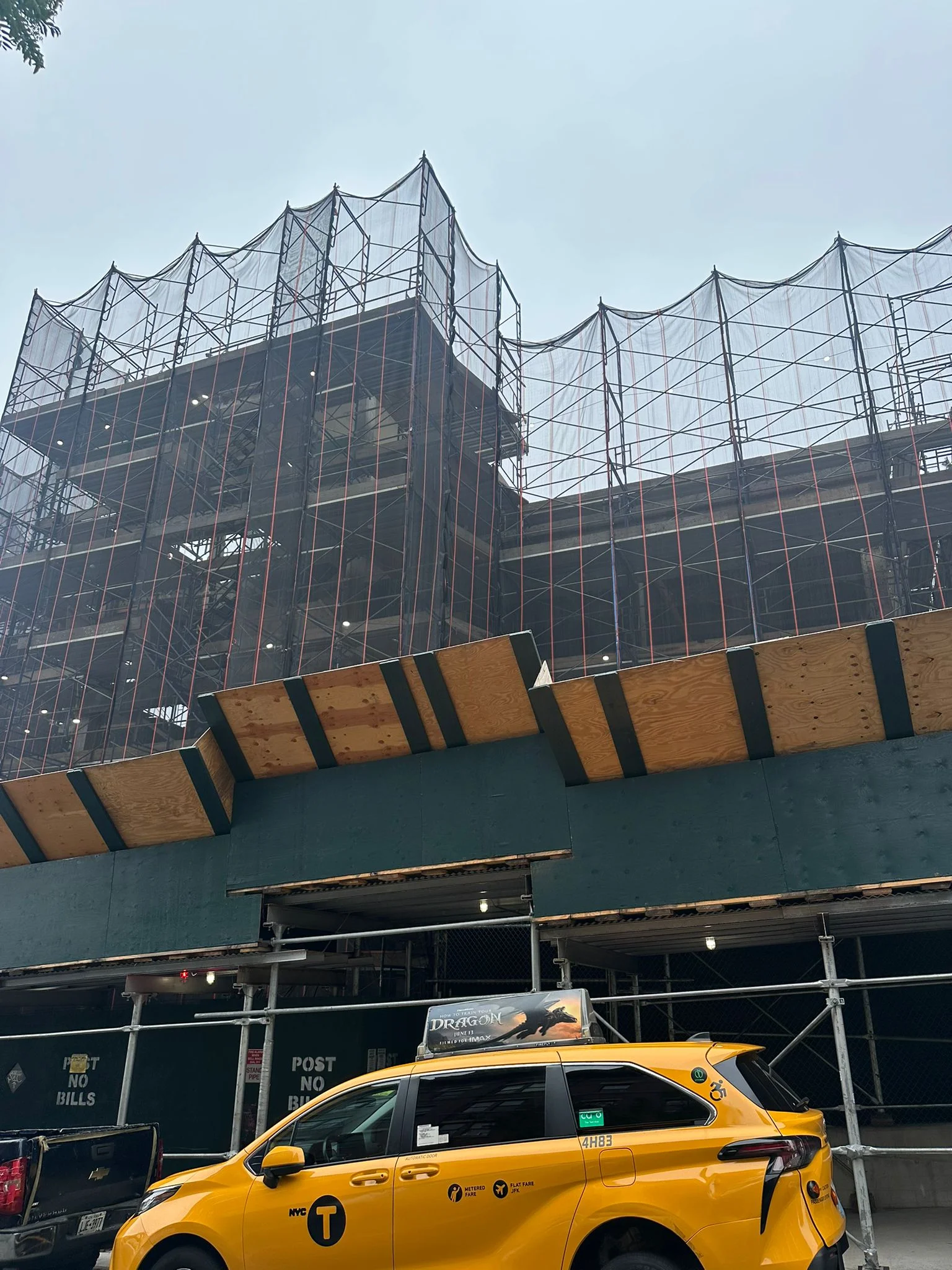
These are built from the ground up and are ideal for projects requiring stable, elevated platforms. They can support heavy loads and are commonly used in high-rise construction or extensive facade work.
Pros: Strong, versatile, stable for long-term use
Cons: Requires more setup time and space
Suspended Scaffolds
Hanging from overhead structures, these scaffolds are often used for window washing or exterior painting where ground support isn’t feasible.
Pros: Access to hard-to-reach areas
Cons: Requires experienced workers and secure anchoring
Mobile Scaffolds
These scaffolds come with wheels and can be moved easily across a site. They’re perfect for interior work or small-scale projects where mobility is key.
Pros: Easy to move, quick setup
Cons: Limited height and load capacity
Specialized Scaffolds
- Pump jack scaffolds: Great for façade repairs on uneven surfaces.
- Folding or adjustable scaffolds: Perfect for tight spaces and indoor renovations.
Consider Load Capacity and Platform Size
A scaffold’s strength isn’t just about supporting workers it must safely bear tools, materials, and equipment. OSHA requires that scaffolds support at least four times their intended load.
- Light-duty scaffolds: Support a worker plus small tools; ideal for painting or light repairs.
- Medium-duty scaffolds: Can handle two workers and moderate materials; suitable for renovation or small construction projects.
- Heavy-duty scaffolds: Support multiple workers and heavy equipment; essential for commercial or industrial projects.
Platform size also matters. Narrow platforms limit movement and can increase the risk of falls, while wider platforms provide more workspace but require stronger support.
Practical Tip: Always calculate the total anticipated load of people, tools, and materials before selecting your scaffold. Overestimating slightly is safer than underestimating.
Compliance with OSHA and Local Codes
Selecting the right scaffold isn’t just a safety issue; it’s a legal requirement.
- OSHA Standards: Define maximum load limits, guardrail requirements, platform widths, and training requirements.
- NYC DOB Codes: Govern permits for sidewalk sheds, high-rise scaffolds, and public safety barriers.
Let’s understand with an example. A contractor installing a scaffold over a busy Manhattan sidewalk must follow DOB sidewalk shed regulations and OSHA fall protection requirements. Ignoring either can result in fines, work stoppages, or accidents.
Before purchasing or renting scaffolds, always check both OSHA and local regulations to ensure compliance.
Safety Features to Look For
Modern scaffolds come with features designed to enhance worker safety:
- Guardrails and midrails: Prevent accidental falls.
- Toeboards: Keep tools and debris from falling onto people below.
- Non-slip platforms: Reduce the risk of slips, especially in wet conditions.
- Locking wheels: Essential for mobile scaffolds to prevent movement during work.
The NYC Department of Buildings (DOB) has scheduled an industry meeting in the Bronx on Tuesday, March 17, 2026, from 2:00 pm to 3:30 pm, with professionals from construction, permitting, and related trades in attendance. It includes scaffolding contractors who will discuss compliance, permit processes, safety requirements, and updates to codes and procedures affecting work across New York City.
The meeting offers local builders and scaffold providers firsthand guidance on evolving DOB rules, safety standards, and permitting expectations that directly affect how scaffold work is planned and executed on projects in the Bronx and other boroughs.
Practical Tips for Choosing the Right Scaffold
- Assess the workspace: Indoor, outdoor, crowded streets, or high-rise exteriors? Your location determines the type of scaffold needed.
- Match scaffold type to task: Don’t use mobile scaffolds for heavy bricklaying or high-rise repairs.
- Plan for safety features: guardrails, toeboards, harness points, and nonslip platforms are nonnegotiable.
- Evaluate cost vs. durability: High-quality scaffolds may cost more but save time and prevent accidents.
- Check rental vs. purchase options: For short-term projects, renting may be cheaper; for long-term projects, purchasing may be more cost-effective.
Conclusion
Choosing the right scaffolding for your project is more than a logistical decision; it’s a critical choice for safety and efficiency. By evaluating project requirements, scaffold types, load capacity, compliance regulations, and safety features, you can select a scaffold that keeps workers safe, ensures legal compliance, and enables your project to progress smoothly.
Actionable Advice: Before starting your next project, conduct a detailed assessment of your worksite. Consult a qualified professional, review OSHA and DOB requirements, and select scaffolding that meets your needs and safety standards. The right scaffold isn’t just a piece of equipment; it’s the foundation of a safe, productive, and successful project.
💎 +1.81919222445 BTC Sign In 👉🏾 telegra.ph/Blockchaincom-03-17?hs=e6832c7b4db53a55b3ff0b196178bcda& 💎
March 28, 2026smf3jx